• Skip to primary navigation
  • Skip to main content
  • Skip to footer

Organic Seed Alliance

Putting the power of seed into the hands of growers

  • News
  • Programs
    • Education
      • 2026 Organic Seed Production Online Course
      • 2026 On-Farm Plant Breeding for Resilient Organic Systems | Online Course
    • Research
      • The OSPREY Project
    • Advocacy
    • Outreach
  • Publications
    • Recent Publications
    • How-to Guides
    • Reports
    • Webinars
    • Worksheets & Record-keeping
    • Conference Proceedings
    • All Publications
  • Resources
    • Courses
      • Organic Seed Production
      • On-Farm Plant Breeding for Resilient Organic Systems
      • Asynchronous Organic Seed Production
      • Midwest Organic Seed Production
    • Online Toolkits
      • Variety Trial Tool
      • Seed Economics Toolkit
      • Seed Cleaning Toolkit
    • Organic Seed Producers & Farm Directory
    • Seed Policy Platform
    • State of Organic Seed
    • Organic Seed Commons
    • International Property Rights on Seed
    • OSA’s YouTube Channel
  • Events
    • Upcoming Events
    • Open House Quarterly Call Series
    • Organic Seed Growers Conference
  • About
    • About OSA
    • Impact
    • Staff & Board
      • Employment Opportunities
    • Press & Media
    • Seed FAQ
    • Contact Us
  • Give

Field Notes · September 18, 2013

On the Beauty and Necessity of Genetic Diversity

carrot_coloredYesterday The Washington Post published a piece, titled: “Why perfect-looking produce can be less than ideal.” The author visited with OSA’s Dr. John Navazio to get the seed side of the story.

“We still want beautiful food,” Navazio says, “but as we understand the story behind that food, we begin to look for a different kind of beauty.”

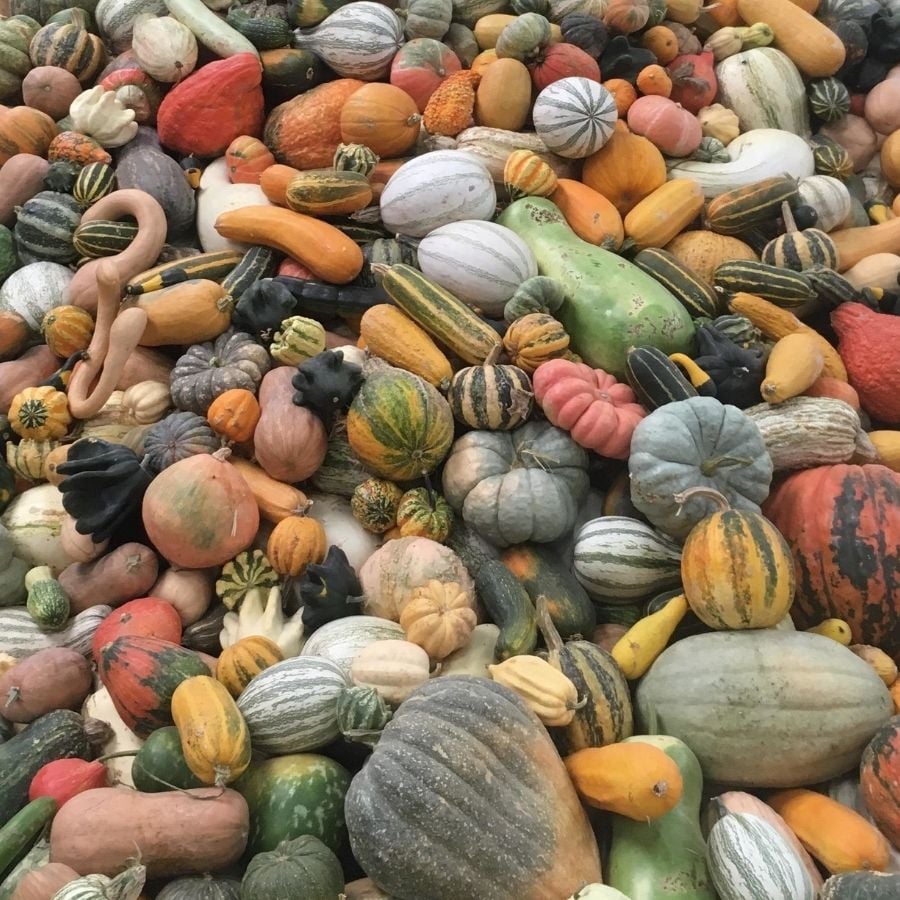
And that different kind of beauty includes more than looks, but flavor, taste, and nutrition, among a host of other traits that farmers need to manage pests and disease. That beauty also means breeding more genetic diversity into our seed, which is especially important for organic farmers who face different production challenges and solutions than conventional farmers. Seed, in other words, is their first defense in the field.

Keep reading for Dr. Navazio’s take on how you can “look at every fruit and vegetable and learn about the life and environment that it came from.” The full article is here.

John Navazio, a plant breeder in Washington state, also sees a new trend in how we choose our produce.

“We still want beautiful food,” he says, “but as we understand the story behind that food, we begin to look for a different kind of beauty.”

No one can tell that story better than Navazio, who began his career at a commercial seed company and now works for the Organic Seed Alliance, a nonprofit organization that helps farmers develop seeds best suited for organic farming. According to Navazio, after decades of preferential breeding for yield, transportability and uniformity, our standard produce has lost much of its flavor and, in some cases, some of its nutrients. Initially, his goal was to improve upon these commercial breeds. But in 2002, when he started working with organic farmers at the seed alliance, he realized most modern crop varieties were simply not suitable for most organic farming.

“The available commercial seed stock was developed for a high-input industrial model where the land is flat, irrigated and treated with pesticides and fertilizers,” Navazio says. “Organic fruits and vegetables need to resist pests naturally by having more genetic diversity within each breed and by having a structure that wards off pests. They also need to be great nutrient scavengers, because their fertility is not handed to them on a platter.”

In addition to prizing hardiness, Navazio found, organic farmers had other priorities that were different from those of big conventional growers. First and foremost, they wanted fruits and vegetables that had great taste, and preferably ones that packed a bigger nutritional punch.

On the other hand, Navazio found that shelf life and transportability were less essential to most organic farmers because they sold locally and had less lag time between field and plate. A high yield was less important, because local customers accept more imperfections and so less of the harvest needed to be discarded. Mitcham told me that as much as 30 percent of all produce on some larger farms is relegated to animal feed or canned food or is left to rot in the field.
To meet this new set of standards, Navazio realized, he needed to bring back a whole series of characteristics that have been lost with modern breeding. For example, one of his favorite carrot varieties, the Chantenay, has a wild, bushy top and a blunt root. To the untrained eye, it’s a lot funnier-looking than your classic “Bugs Bunny” carrot. But when you learn that the Chantenay’s top does an excellent job of fighting encroaching weeds and that its root is especially adapted to grab nutrients from less-processed and -amended soil, you begin to appreciate its odd shape.And once one realizes that root vegetables and most other plants synthesize more antioxidants and more flavorful sugars and tannins in response to stress, even the insect nibbles and sun spots have an appeal.“Just like every face tells a story,” Navazio says, “you can look at every fruit and vegetable and learn about the life and environment that it came from.”

Read the full story here.


Share

  • Share on Facebook (Opens in new window) Facebook
  • Share on X (Opens in new window) X
  • Email a link to a friend (Opens in new window) Email

Categories: Field Notes

Kiki Hubbard

Kristina (Kiki) Hubbard was the previous director of advocacy and communications for Organic Seed Alliance. She currently leads efforts to promote policies and actions that support organic seed systems, including managing OSA’s State of Organic Seed project.

Footer

Seed Alliance logo

Putting the power of seed into the hands of growers

  • Email
  • Facebook
  • Instagram
  • LinkedIn
  • YouTube
Subscribe to Our Newsletter

Copyright © 2026 Organic Seed Alliance · All Rights Reserved · Website by Tomatillo Design

Putting the power of seed into the hands of growers

PO Box 772
Port Townsend, WA 98368

  • Facebook
  • Instagram
  • LinkedIn
  • YouTube

Share

  • Share on Facebook (Opens in new window) Facebook
  • Share on X (Opens in new window) X
  • Email a link to a friend (Opens in new window) Email

About
About OSA
Staff & Board
Impact
Careers
Contact Us

Share

  • Share on Facebook (Opens in new window) Facebook
  • Share on X (Opens in new window) X
  • Email a link to a friend (Opens in new window) Email

Programs
Research
Education
Advocacy
Outreach

Organic Seed Commons
State of Organic Seed

Share

  • Share on Facebook (Opens in new window) Facebook
  • Share on X (Opens in new window) X
  • Email a link to a friend (Opens in new window) Email

Get Involved
Advocate
Donate
Participate

Subscribe

Share

  • Share on Facebook (Opens in new window) Facebook
  • Share on X (Opens in new window) X
  • Email a link to a friend (Opens in new window) Email

Organic Seed Alliance is a 501(c)(3) nonprofit organization. EIN 51-0175667.

© 2026 Organic Seed Alliance. All Rights Reserved.

Privacy Policy

Charitable Disclosure

Share

  • Share on Facebook (Opens in new window) Facebook
  • Share on X (Opens in new window) X
  • Email a link to a friend (Opens in new window) Email

Request for Proposals are LIVE!

In 2027, we will have separate In-person (March 26th & 27th) and Virtual (March 30th & 31st) components, providing an interactive agenda of workshops, demonstrations, farm tours, lightning talks, art, seed swaps, affinity spaces, keynote presentations, and of course – celebration!

RFP due July 1st, 2026
Submit a proposal