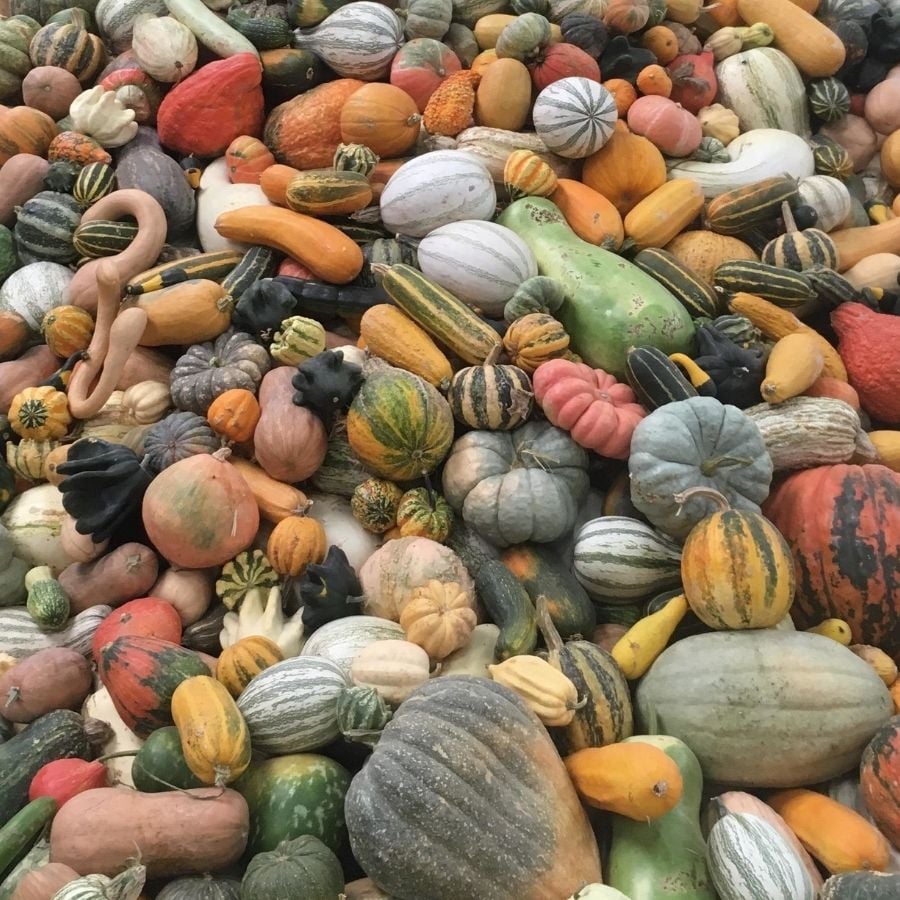
Are you interested in learning how to grow and select locally-adapted varieties? Apply to our first cohort in on-farm plant breeding for resilient organic systems. Local-adapted varieties have the potential to increase the resilience of our organic food supply and help us to preserve and regenerate our natural resources. This comprehensive, interactive, and cohort-based program is designed to provide in-depth training for farmers and gardeners.
Applications are now closed for the 2026 cohort. Please contact Ana Galvis at ana[at]seedalliance.org with any questions.
Course Overview
- 14 sessions correspond to an assortment of technical, economic, and socio-cultural aspects of On-Farm Plant Breeding for Resilient Organic Systems
- The course will run from May 7th to October 8th, 2026
Highlights
- Comprehensive peer-to-peer networking and collaborative learning opportunities
- Individualized learning opportunities to support the development of professional and personal paths in seed stewardship
- Possibility to have personalized mentorship for professional and personal development in seed production for students located in the Pacific Northwest and Southwest TOPP regions (PNW: Washington, Oregon, Idaho, Montana, and Wyoming; SW: Arizona, California, Hawaii, Nevada, New Mexico, Texas, and Utah).
Requirements
- Farmer or gardener with existing knowledge of organic seed production
- Commitment to hands-on learning and professional growth
- Desire to contribute to sustainable agricultural practices
Practical Details
- Cost: Sliding scale from 50 USD to 500 USD.
- Full fee waiver available. Please contact Ana Galvis (ana@seedalliance.org) for more information on this.
- Format: Online, with modules designed to complement on-farm training
Want to dig into the course details? Have a look at the 2026 curriculum.
Application Process
Application Due Date: April 10th, 2026
Interested candidates can apply using the online application form. For more information or questions, please contact Ana Galvis at ana[at]seedalliance.org.


This program is supported by the USDA’s Transition to Organic Partnership Program (TOPP) and Western Extension Risk Management Education.