Re-posted with permission from UC Davis
A new effort to provide California growers with seeds for tomato, bean, pepper and other crop varieties that are specially bred for organic farming has been launched at UC Davis.
The organic plant-breeding project was developed in direct response to California organic growers, who have reported that the scarcity of seeds for cultivars that meet the needs of organic farming can seriously impact a farm’s bottom line.
“Seeds bred to account for the difference between growing organically and conventionally could improve farm yields and marketing potential for produce, yet organic seeds available to farmers are rarely developed with these organic management considerations in mind,” said Charlie Brummer, director of the UC Davis Plant Breeding Center and coordinator of the new organic breeding project.
Studies show that plant varieties developed under organic conditions can out-perform those developed under conventional conditions, Brummer said.
The new breeding effort, funded at just under $1 million by the Organic Research and Extension Initiative of the U.S. Department of Agriculture, will develop new cultivars on certified organic land at the Student Farm, a program of the Agricultural Sustainability Institute at UC Davis. Breeding programs will be led by graduate students as part of their hands-on training to be plant breeders.
“When we started the Plant Breeding Center in 2014, we wanted to give our plant-breeding students experience with real cultivar development projects that would result in products that growers and seed producers would want,” Brummer said. “This project lets us put those pieces together in a very meaningful and exciting way.”

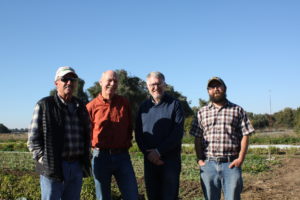
Photo credit: Aubrey White, UC Davis
He noted that there are myriad genetic traits that apply specifically to organic agriculture. For example, because organic farmers tend to rely on nonchemical methods to control pests and supply nutrients, natural resistance to pests and adaptability to organic soil conditions are important traits for crops grown organically. And increasingly, organic growers also need crop varieties that meet specific market niches, to clearly differentiate their products.
Partnering with organic growers UC Davis has a long history of plant-breeding projects, but few have focused on organic seed or vegetable production until now.
“I see this as a real opportunity to build bridges between UC Davis breeding programs and organic farmers, which I anticipate will grow well beyond this project,” says Jared Zystro, assistant director of research and education at Organic Seed Alliance, an industry partner on the project. “One of the great things about partnership with the university is the expertise that breeders bring in their particular crops. That expertise is coupled with the thinking about how to efficiently execute the breeding process.”
Opportunities for students and community UC Davis graduate students will be taught the breeding process to help prepare them for plant-breeding careers. Student breeders will work at the Student Farm, a farm-scale campus facility with 35 years of field-based teaching and research on organic farming. They also will collaborate with farmers and the organic seed industry to understand specific breeding needs and conduct on-farm trials to determine if potential cultivars have merit.
“This project is exciting because of its focus on actually trying to release cultivars,” says Zystro, a plant breeder himself. “That’s an experience that graduate students rarely get in their educations.”
Mark Van Horn, director of the Student Farm, said that in addition to training graduate students, the new project would showcase organic breeding to the surrounding community.
“Over the course of the project’s four years, thousands of grade-school students will visit the Student Farm and be exposed to the importance of organic crop breeding,” he said.
For more information, contact:
Amanda Pietras, Plant Breeding Center, (530) 752-2159, ampietras [at] ucdavis.edu
Charlie Brummer, Plant Breeding Center, ecbrummer [at] ucdavis.edu
Pat Bailey, UC Davis News Service, (530) 752-9843, pjbailey [at] ucdavis.edu