This op-ed was originally published in the Ann Arbor Independent. Be sure to also check out OSA’s Policy Brief: Climate Change & Seed and 2023 Policy Platform for Seed.
We know the idea that our planet is warming can be a source of heated political debate. Although the scientific community has reached a consensus on climate change, the call for solutions often goes unanswered. Meanwhile, farmers like us are left feeling the impacts of extreme weather events, such as heavy rainfall and increased wind. Growers across the country are experiencing other effects in the form of ice storms, wildfires, and drought, all projected to become more intense and regular.
As farmers who also grow seeds, we are especially vulnerable to climate disruptions because of the longer time seed crops remain in the field; for example, radishes can be harvested after 30 days for consumption but require six months to produce seeds. Supporting seed growers is critical to food security. By selecting and saving seeds, we adapt crops to changes in climate as well as climate-influenced weed, pest, and disease pressures. This helps develop resilient varieties regionally adapted to the challenges we face in growing seed and feeding people.
In our Great Lakes area, where weather experiences seasonal temperature cycles, even incremental changes can have major impacts. At our farm in Ann Arbor, we faced numerous setbacks as we received more rainfall than in the previous eight years. Because warm air can hold more water vapor than cooler air, climate change revs up the evaporation process and disrupts rainfall patterns. Wet fields make it impossible to navigate heavy farm equipment, delays planting schedules, and increases pest populations such as ticks. After a decade without a tick presence, we experienced an explosion that caused us to triple our guinea fowl flock to control the population.
More heat in the atmosphere can lead to increased wind speeds, a trend that wreaked havoc on our farm. Seed cleaning for some varieties needs to be done outdoors on a windless day. Such days last year were few and far between, forcing us to get up before sunrise to check the weather. Wind gusts continually blew row covers off, which smaller farms like ours depend on to prevent cross-pollination since we don’t have enough land to meet minimum isolation distance requirements.
There is only so much we can do alone, which is why we hope the next Farm Bill will address the root cause of these disturbances and fund adaptation strategies.
Increased investments in public plant breeding would help meet the diverse needs of Michigan growers. Some research grant programs, such as the Sustainable Agriculture Research and Education (SARE) program, fund farmers to develop resilient crop varieties. For example, on our farm we’re developing a tomato variety to resist local disease pressures.
Another policy solution we hope to see included is the Agriculture Resilience Act. This bill focuses on farmer-led solutions, including improving soil health. Healthy soil sequesters more carbon and holds more water, which reduces the impact of heavy rains on fields. The bill requires increased funding for research and mitigation strategies, which could help grow more sustainable and climate-resilient farms.
Senator Stabenow is well positioned as Chairwoman of the Senate Agriculture Committee to promote policy initiatives and investments centering climate resilience. We hope she’ll take this path to ensure Michigan growers have the seed they need to confront our climate crisis.
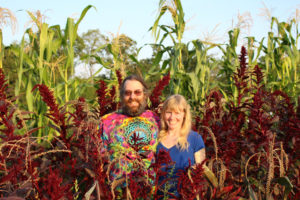
Michael Levine and Erica Kempter operate Nature and Nurture Seeds in Ann Arbor, Michigan.