Earlier this month, I had the opportunity to participate in the Organic Grower Summit in Monterey, CA, a conference that focuses on larger organic specialty crop producers in California. I was invited to join a panel discussing the current challenges in organic seed, and I’d like to share some insights from our conversations about the present and future of organic seed.
While local and regional organic seed businesses are experiencing exciting growth, evidence shows that companies traditionally investing in organic seed for larger producers are scaling back their investments in the United States. This contrasts with Europe, where the latest report from Liveseed indicates a majority of firms are increasing their organic seed investments. What’s happening here?
Several factors might be contributing, including increasing climate-related challenges in seed production and limitations in organic-compliant hybridization techniques. However, from conversations with many seed company representatives, it appears that the primary challenge to organic seed growth is demand. According to OSA’s State of Organic Seed project, while smaller organic vegetable producers have been upping their use of organic seed, the same trend is not observed among larger growers.
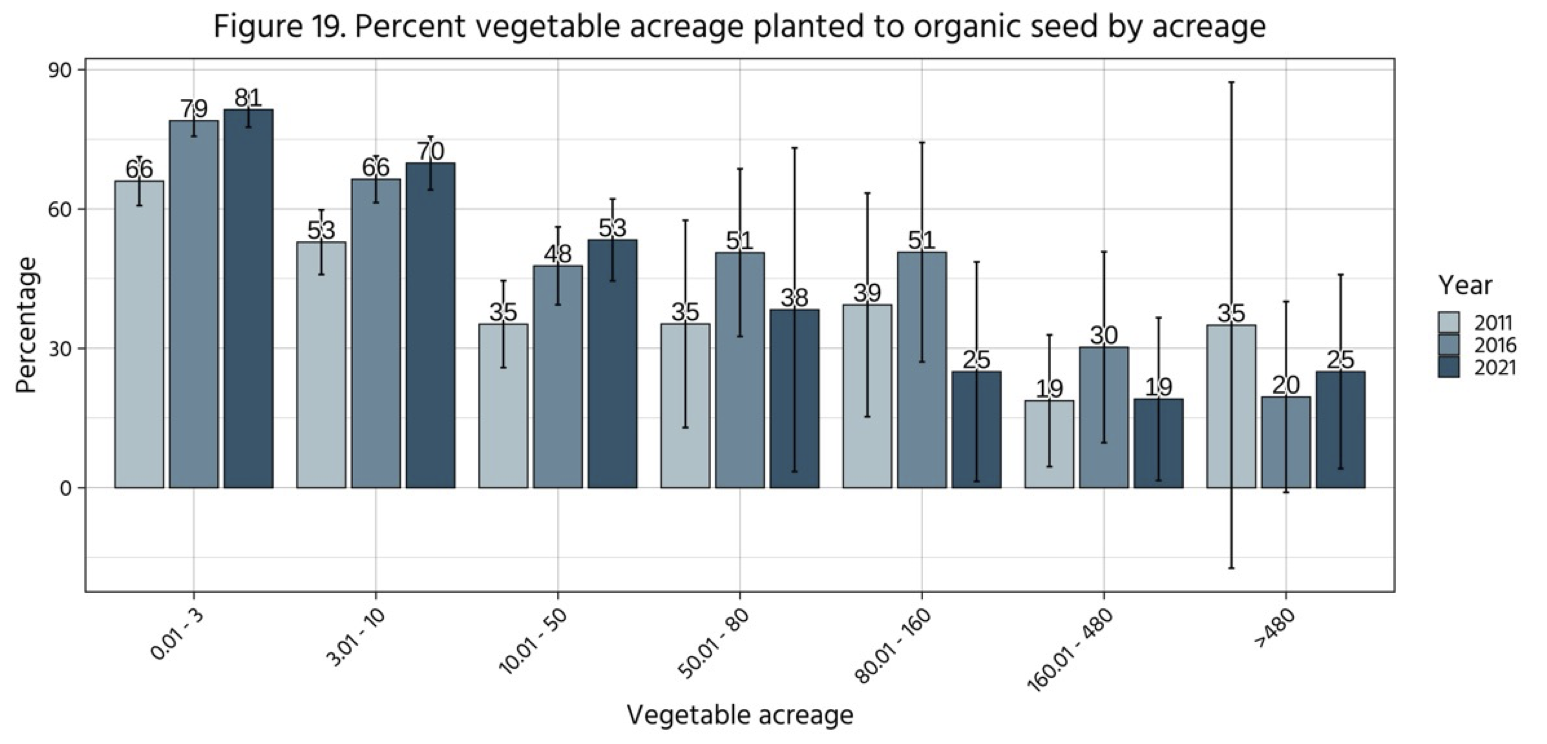
The State of Organic Seed data suggests several reasons for this stagnation in organic seed usage among larger growers. These reasons include a need for the latest disease resistance traits not yet available in organic varieties, as well as demands from buyers for specific varieties for which organic seed may not be available. In addition to these factors, we can see that the cost differential between organic and conventional seed influences its use. An important observation is the role of certifiers: when they ask producers to source organic seed more thoroughly, an increase in organic seed usage is noted.
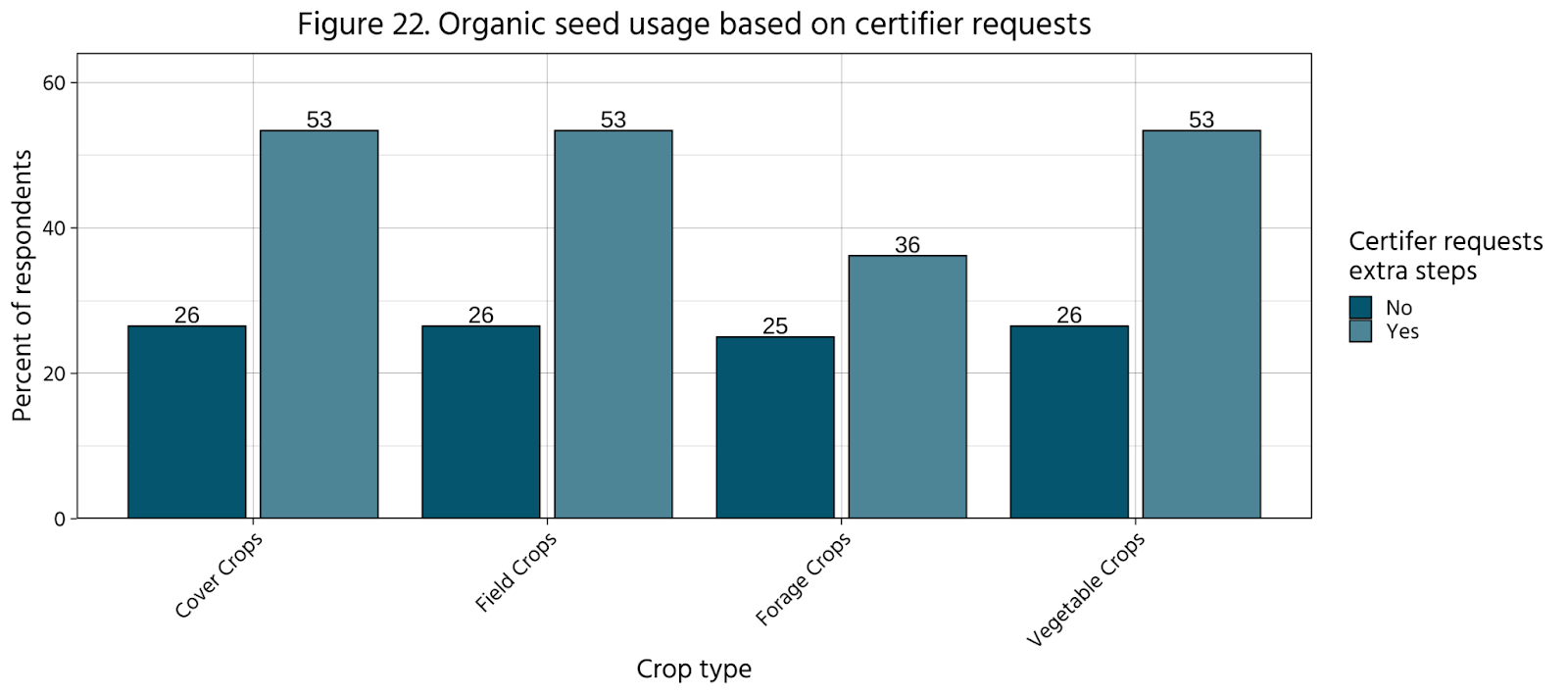
What can be done? The current organic regulations allow for the use of conventional, untreated seed on organic farms when equivalent organic varieties are not commercially available. In Europe, the rise in organic seed usage and investment is supported by a system that evaluates crop categories for sufficient organic variety options, requiring the use of organic seed for those crops. This system relies on a centralized seed system in Europe, where varieties undergo extensive testing before commercial sale, a model not practical for the U.S. Here, the National Organic Standards Board (NOSB) passed a recommendation requiring organic producers to demonstrate annual improvement in sourcing organic seed and planting stock. We hope to see this recommendation implemented, encouraging producers who did not increase their organic seed usage to take extra steps in sourcing.
Why does it matter? Supporting organic seed means investing in seed companies’ plant breeding and trial work to develop and distribute varieties that meet the distinct needs of organic agriculture. Additionally, organically grown seeds contribute significantly to climate mitigation efforts by eschewing fossil fuel-based fertilizers and synthetic chemicals.
Seeds, inherently alive and dynamic, are the foundation of agriculture. Their ability to adapt through seed saving, selection, and classical breeding is vital for crop survival and resilience. In our changing climate, this adaptability becomes increasingly significant, mitigating risks for growers and the communities they serve. Organic plant breeding and seed production are not just agricultural practices; they are essential components of adaptable and resilient farming systems.