We’re busy behind the scenes preparing for the upcoming growing season as we transition from winter into spring. As we build upon our successes and surprises from the first year of the OSPREY (Organic Seed Production Research on Economics and Yield) project, the foundation for our second year will be even stronger. We’re excited to share some preliminary data with you!
Through this multi-year Organic Research and Extension Initiative (OREI) funded project, a nationwide team of researchers, educators, and organic seed stakeholders is working to address critical needs and knowledge gaps in the organic seed sector, while advancing organic seed production practices for producers.
For more information, please visit our previous posts since our project kick-off in 2024.
What We’ve Done
Germination Testing
Germination testing is a critical step to check the quality or “fitness” of your seeds, as well as how much seed you should sow next year.
After all final cleaning was completed, field researchers at OSA’s Washington trial site tested germination rates. There are a couple of DIY different methods, such as an in-soil or paper roll germination test, but labs can also calculate precise rates.
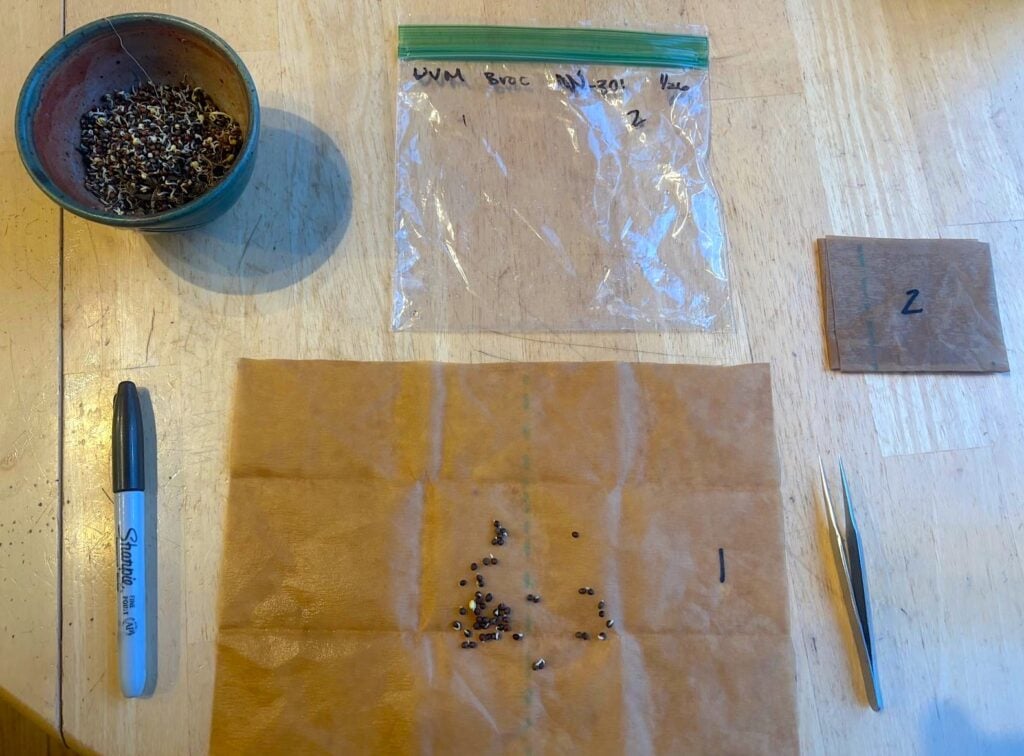
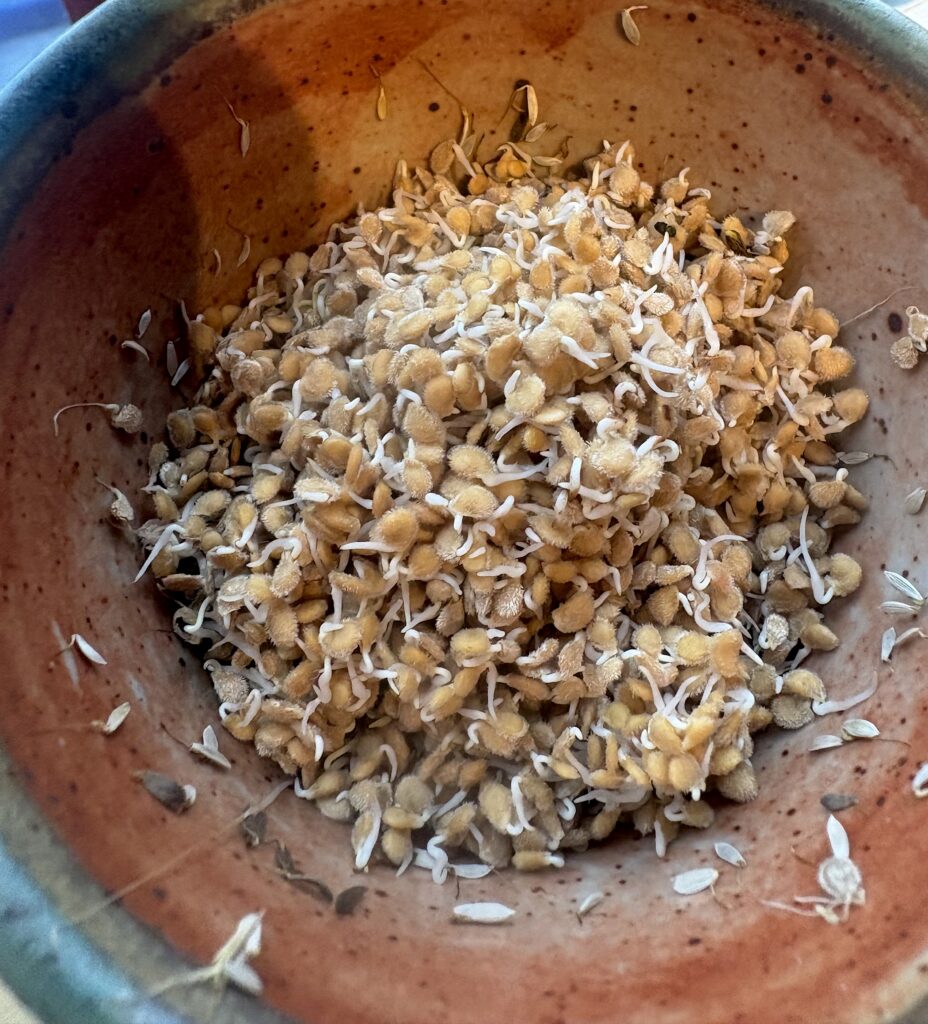
The end goal is to find the number of good seeds and the ratio or percentage of germinated to ungerminated seeds (100% if 10/10 seeds germinated, 90% if 9/10 seeds germinated, and so on).
For step-by-step instructions on how to conduct germination tests of your own, please read OSA’s A Seed Saving Guide for Gardeners and Farmers (page 18).
Caption: Germination testing set-up for University of Vermont’s broccoli seeds; pile of completed germ-tested seeds. Photo by Katie Jagger (OSA).
Winter Presentations
It’s a great time of the year to give presentations to organic seed stakeholders before the field season ramps up. Oregon State University Extension Specialists Dr. Kristie Buckland and Dr. Cynthia Ocamb presented an overview of the OSPREY project to 35 attendees at a Specialty Seed Growers of Eastern Oregon event. Seed yield and disease data from the 2025 replicated trials at the OSU Willamette Research Station were shared with the group.
What We’re Currently Doing
2025 Data Review
SeedLinked is a key partner in developing the comprehensive Organic Seed Yield Database that will house trial results, seed production and economic data, and historic seed yield data.
We’re ready to share some early data!
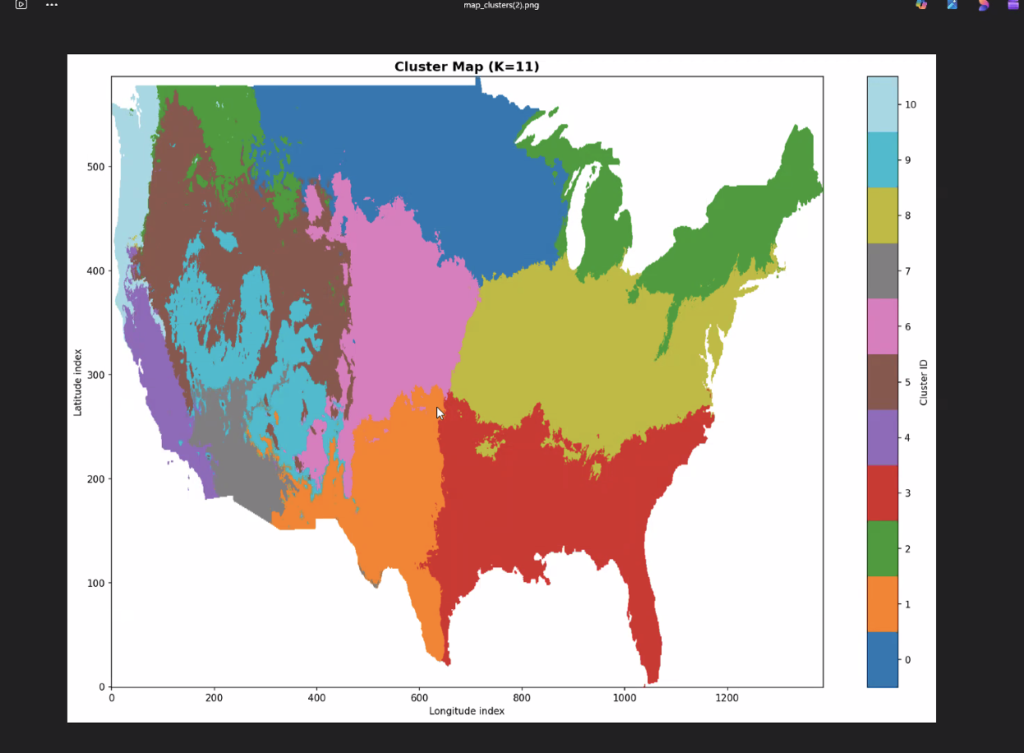
By combining the 2025 replicated and participatory trial data with PRISM environmental data from the trial sites, a bio-regional map was created to define and specify the boundaries of regional growing zones.
Thus far, it appears that “environment” dominates the effect on seed yield within a genotype x environment x management (GxExM) framework.
Bioregional map compiled from environmental data at replicated and participatory trial sites (PRISM/© SeedLinked)
Environmental stressors and their impact on crops, varieties, and the stability of seed yield are important during the entire growing season. However, it also appears that the specific growth period (i.e., P1, P2, P3) in which the stressor occurred is the most important factor when measuring impact on overall seed yield.
Climate Volatility Index (CVI) results will help growers determine the recommended crops for their region (i.e., temperate vs. arid) based on ease of production (easy to challenging) and typical stressors in that region.
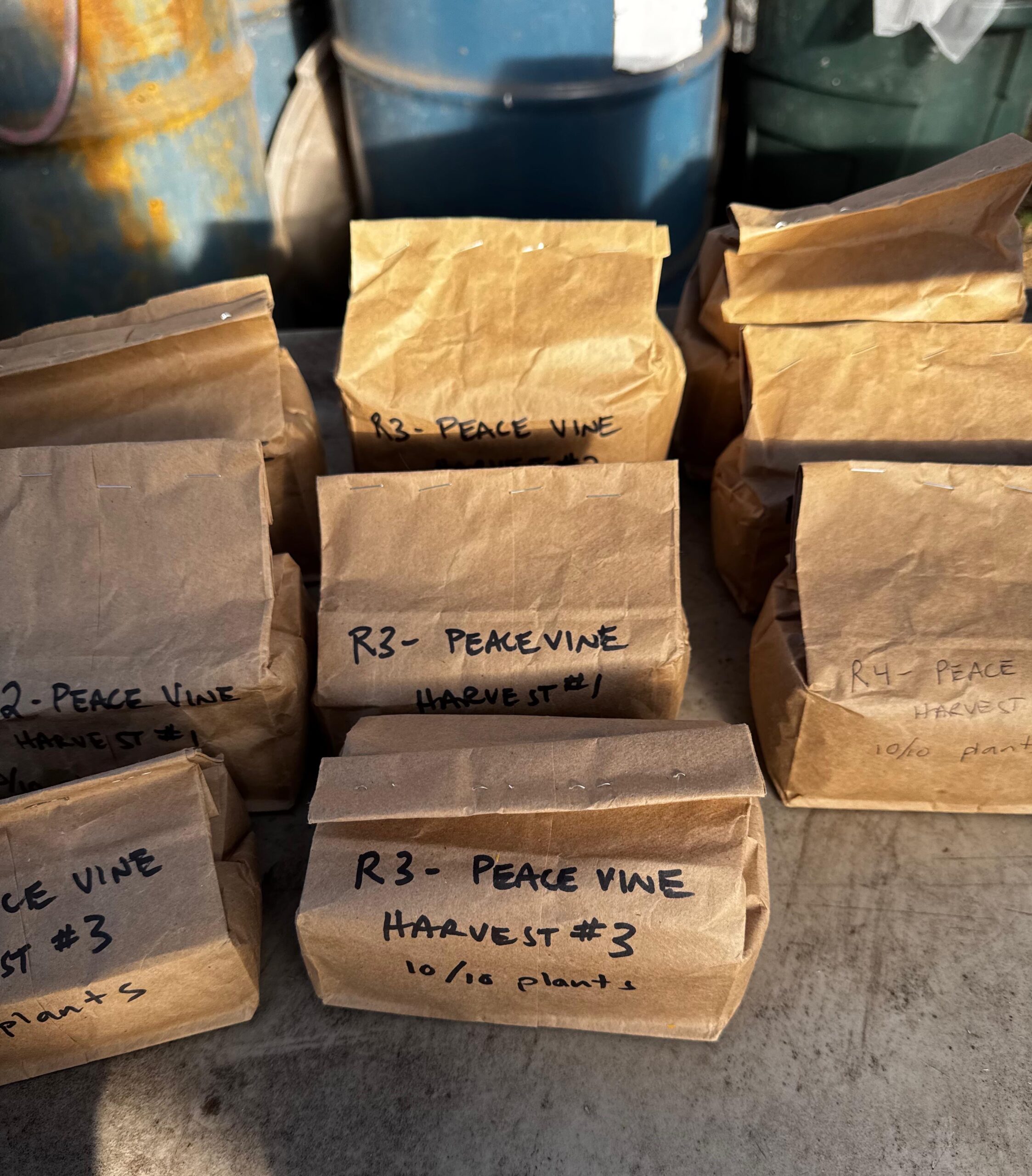
One improvement for 2026 trials is that more efforts will be made to explore differences in seed yield across and within market types (for example, Peacevine cherry tomato compared with other cherry tomatoes vs. paste and slicer categories).
What’s Next
2026 Participatory and Replicated Research Trials
Want to be a part of this research? If you’re an experienced and certified organic seed grower interested in being paid to conduct seed yield research, sign up using our Google Survey. You will contribute to a growing body of knowledge that benefits all seed producers, including your own operations.
Sign-ups are open throughout 2026 and 2027 (2027 trial recruitment will begin in 2026). We could use your help with recruiting organic seed growers in the Southwest, Southeast, and Central United States to cover research needs in these critical bioregions!
As an overview, growers will perform “Standard Trials” and produce seed for all three varieties of up to four “core” crops:
- Tomatoes (Amish Paste, Brandywine, Peacevine).
- Broccoli (De Cicco, Solstice, Waltham 29)
- Lettuce (Black Seeded Simpson, Green Towers, Red Salad Bowl),
- Summer squash (Costata Romanesco, Dark Star, Yellow Crookneck)
Participatory trials are complementary to the replicated trial research sites with Carolina Farm Stewardship Association, Colorado State University, Cornell University – Cooperative Extension, Oregon State University – Cooperative Extension, Organic Seed Alliance (CA/WA), and University of Vermont – Cooperative Extension.
In addition to a second year of replicated trial research, Oregon State University and OSA at the CR Shively Farm in California will complete irrigation management trials to study the effects of various irrigation levels on seed yield. The California trial site will also complete a pilot test to determine isolated seed yield quantities for outcrossing crops (broccoli and summer squash).
Get Involved
For more information about the OSPREY project in general or to participate in upcoming research and outreach activities, please visit our Research page or contact jared@seedalliance.org and molly@seedalliance.org.
To connect more with OSA, check out our event offerings for workshops, webinars, farm tours, research presentations, advocacy hours, educational courses, conferences, summits, and more. We’d love to interact with you in person or virtually!
About Organic Seed Alliance
Organic Seed Alliance is a 501(c)(3) nonprofit that puts the power of seed into the hands of growers. Our work ensures an abundant and diverse supply of ecologically grown seed, tended in perpetuity by skilled and diverse communities of seed stewards.
— This project was funded by the Organic Research and Extension Initiative grant, part of the USDA National Institute of Food and Agriculture. Grant number 2024-51300-43056.