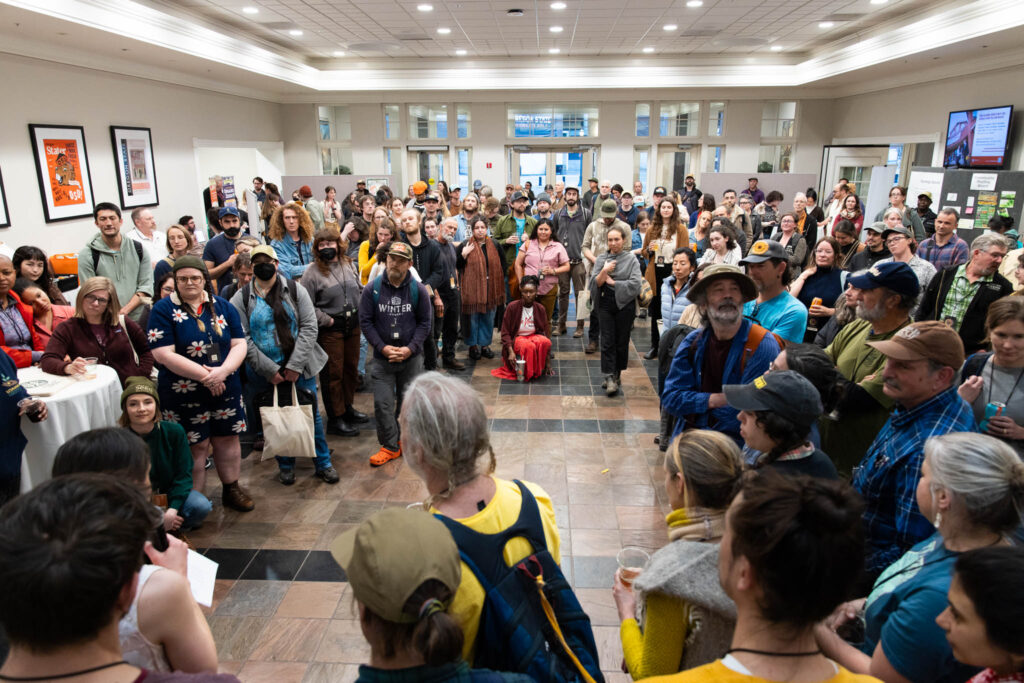
As conveners we create long tables, including a diverse social and political spectrum of those working in organic seed.
We invite rich and often nuanced discussions that many feel passionate about, something we see as critical for co-creating a future of organic seed that works for everyone. Because of this, facilitators at our events are often tasked with balancing a wide array of perspectives, experiences, and ways of knowing. We’ve created these training materials in an attempt to help facilitators understand and iterate on the shared culture of OSA, in addition to offering some practical frameworks for how to build a strong foundation for your own particular flavor of facilitation.

2025 OSA Facilitator Handbook
This resource is designed to aid facilitators of any experience level, with a focus on giving you the tools and information you need to create a culture of inclusion, clarity, and authenticity in spaces where weighty conversations about food, land, and the future are held.
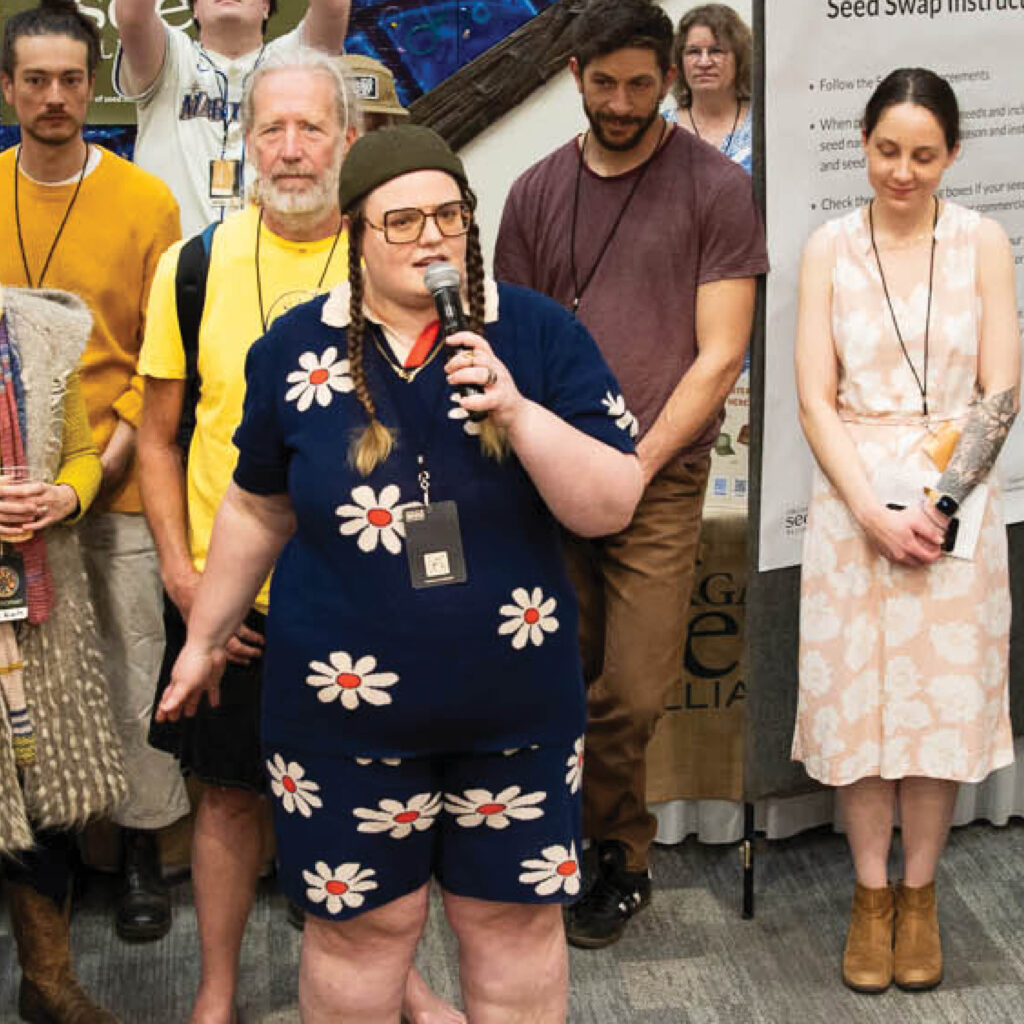

We all have a role in tending the space. During this gathering we agree to:
- Speak for ourselves and make space for others
- Be as present as possible
- Be aware of who is missing in each conversation
- Remember that no one has a monopoly on truth, and everyone’s experience is valid
- Critique ideas, not people
- Listen to our bodies and tend to their needs
- Give some grace for technical and logistical difficulties
- Aim for connection, not perfection

Organic Seed Alliance is utilizing the Equity Filter created by the WA Food Policy Forum:
- What is the proposal under consideration?
- What are the desired results and outcomes?
- Who is likely to benefit from, who is likely to be burdened by, and who might be left out of this proposal? Consider racial, ethnic, or economic disparity.
- How and to what extent might the proposal reduce inequities experienced by the populations identified in the previous question.
- What perspectives and data does Organic Seed Alliance need to consider to ensure the proposed action will advance equity?
- What unintended consequences may result from this proposal that could affect equity? Consider to what extent the proposal advantages people and/or groups who have traditionally benefited from privilege.
- What feedback from this exercise about opportunities to advance equity should be shared with those who will be implementing the proposed action?
A very special thank you to Kitt Healy (Food Systems Strategist) and Rhys Thornvald-Hansen (Parallax 49) for their support in developing the Facilitator Handbook and Training.
These resources are living documents and we welcome your feedback.